When Should You Get an STI Test Before a New Partner or Lifestyle Event?

The best time to test is before the conversation gets urgent. If you wait until the night before a new hookup, a lifestyle event, or the first time with a new partner, you may not get results back in time, and a very recent exposure may not show up yet.
A good rule: plan your test about 2 to 3 weeks before the event or first sexual contact. That gives most people enough time to get results, treat anything that comes up, share information calmly, and make safer choices together.
This guide is informational, not a substitute for medical advice. If you have symptoms, a known exposure, or a specific health concern, speak with a clinician or sexual health service.
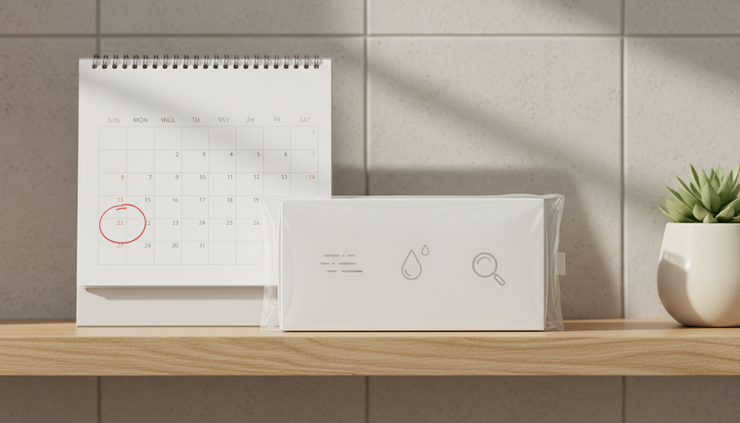
The short answer is to test 2 to 3 weeks before
For most people planning ahead, 2 to 3 weeks before a new partner or lifestyle event is the sweet spot.
That timing helps because:
You are less likely to be testing too early after a recent exposure.
You have time to get results before the event.
You can follow up if a result needs confirmation.
You can get treatment if needed.
You can talk with partners without pressure.
Testing the morning of an event might feel reassuring, but it often gives a false sense of certainty. Many infections have a “window period,” which is the time between exposure and when a test can reliably detect it. If something happened a few days ago, a test today may not catch it.
That does not make testing pointless. It means timing matters.
If your last possible exposure was more than a few weeks ago, a test 2 to 3 weeks before your plans is usually a practical choice. If you had a very recent exposure, you may need to test now and test again later.
Understand the window period before you rely on a result
A test result reflects what the test can detect at that point in time. It does not guarantee that no infection is developing from a recent exposure.
Different infections show up on different timelines. Exact timing depends on the type of test, the sample used, and your body’s response, but these general ranges are useful:
Infection | When many tests can often detect it | Why follow-up may matter |
Chlamydia | Around 1 to 2 weeks after exposure | Testing too soon can miss it |
Gonorrhea | Around 1 to 2 weeks after exposure | Site-specific testing may be needed |
Trichomoniasis | Often around 1 week or more | More common in some groups than others |
Syphilis | Often several weeks after exposure | Early infection can be missed |
HIV | Depends heavily on the test type | Some tests detect earlier than others |
Herpes | Usually tested when symptoms are present | Blood tests can be hard to interpret |
The key point is simple: a recent exposure can fall inside the window period. If you had sex last weekend and test today, a negative result may not tell the whole story.
For HIV, timing depends on the test. Lab-based antigen and antibody tests can generally detect infection earlier than antibody-only rapid tests. Some follow-up testing may still be recommended after a possible exposure. A clinician or testing service can guide you based on the type of test you used.
If you have symptoms, test as soon as possible
Do not wait for the “perfect” pre-event testing window if you have symptoms.
Get tested promptly if you notice:
Burning or pain when peeing
Unusual discharge
Genital sores, bumps, or blisters
Pelvic or testicular pain
Rectal pain, bleeding, or discharge
A rash, especially after a possible syphilis exposure
Flu-like symptoms after a higher-risk exposure
Symptoms do not always mean an STI, and many STIs cause no symptoms at all. Still, symptoms are a clear reason to pause sexual plans and get checked.
If a clinician gives treatment, ask when it is safe to have sex again. For some infections, partners also need treatment to avoid passing the infection back and forth.
Test after the right kinds of contact
A standard urine or genital swab does not always cover every area where exposure happened. If you have oral or anal sex, ask whether you need throat or rectal swabs too.
This matters because gonorrhea and chlamydia can infect the throat, rectum, genitals, or urinary tract. A urine test may be negative while a throat or rectal infection is still present.
When booking a test, be direct about the kinds of sex you have. You do not need to give a dramatic explanation. You can simply say:
“I want testing based on oral, genital, and anal exposure.”
That one sentence helps the provider choose the right samples. It also reduces the chance of missing something that a basic panel would not check.

Before a lifestyle event, build in time for results and decisions
Lifestyle events can involve more moving parts than a one-on-one date. There may be multiple partners, shared expectations, event rules, condoms or barriers, and different comfort levels around disclosure.
Testing 2 to 3 weeks before gives you time to handle the practical side without stress.
A simple timeline can look like this:
Timing | What to do |
3 to 4 weeks before | Book your test if appointments are hard to get |
2 to 3 weeks before | Test, especially if your last exposure was not very recent |
1 to 2 weeks before | Review results and follow up if needed |
Before the event | Share your status, boundaries, and safer sex preferences |
If something changes close to the event, such as a new exposure or a partner telling you they tested positive, update your plan. That may mean retesting later, using barriers more carefully, skipping certain activities, or choosing not to attend.
A negative result is useful, but it is not a free pass to ignore risk. It works best alongside condoms, dental dams, gloves when relevant, vaccination where appropriate, and honest communication.
Before a new partner, test before sex if you can
With a new partner, testing works best when it happens before sexual contact rather than after anxiety sets in.
A practical approach is:
Test before the first time you have sex, if possible.
Share when you tested and what was included.
Ask the same from the other person.
Talk about what has happened since the test.
Decide together what barriers or boundaries make sense.
The phrase “I’m negative” can sound clear, but it leaves out important details. A better version is:
“I tested two weeks ago for chlamydia, gonorrhea, syphilis, and HIV. I have not had sex since then.”
That gives real context. It tells the other person what was tested, when it happened, and whether anything could have changed since.
If you have had sex since your last test, say that too. It does not have to become a confession. It is basic health information.
If you had a recent exposure, use a two-step plan
Sometimes the timing is not ideal. Maybe you had sex recently, then got invited to an event. Maybe a new relationship is moving quickly. Maybe a condom broke.
In that case, do not rely on one early test.
Use a two-step plan:
Test now
This can catch infections from earlier exposures and gives you a starting point.
Retest after the window period
This helps account for the recent exposure that may not show up yet.
During the gap, be honest with partners. You can say:
“I tested, but I had a recent exposure, so I’m still inside the window period. I’m planning to retest.”
That kind of clarity builds trust. It also gives everyone a chance to choose their own comfort level.
If the exposure may involve HIV risk, ask a clinician quickly about post-exposure prophylaxis, often called PEP. It must be started soon after exposure, so do not wait for routine test timing if you are worried.
Do not use “clean” to describe test results
People often say “clean” when they mean they tested negative. It is common, but it can add stigma. Having an STI does not make someone dirty.
Better words include:
Negative
Positive
Current status
Last tested
Treated
Awaiting results
Instead of asking, “Are you clean?” try:
“When were you last tested, and what was included?”
That question is more respectful and more useful.
Choose a testing option that you will actually use
The best test is the one you complete correctly and in time.
Options may include:
A sexual health clinic
A primary care provider
A community testing site
A lab-based appointment
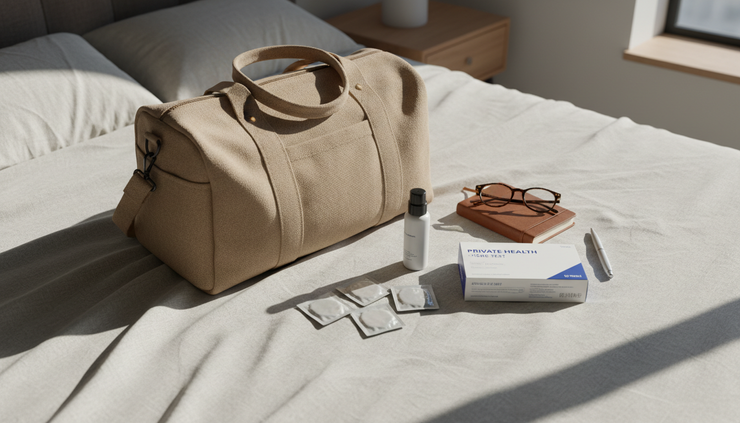
A mail-in or at-home collection kit
Some people prefer an at-home STD test through services like Lust Labs, especially when at-home testing or TASSO testing options make it easier to confirm your status before plans.
Whatever route you choose, check what the panel includes. “Full panel” can mean different things depending on the provider. It may not include herpes, hepatitis, throat swabs, rectal swabs, or HIV RNA testing unless specifically requested.
Also check result timing. If the event is in four days and results take a week, that is not the right fit for this plan.
Keep your results current
How often to test depends on your sex life, number of partners, barrier use, and local medical guidance. People with new or multiple partners often test more regularly than people in mutually monogamous relationships.
For lifestyle events or new partners, the main question is not only “Have I ever tested?” It is:
“Is my result current enough to be useful?”
A result from six months ago may not say much if you have had new partners since then. A result from last week is more useful, unless there was a recent exposure that is still inside the window period.
The cleanest plan looks like this:
Test 2 to 3 weeks before.
Avoid new exposures between the test and the event, or be clear if they happen.
Share what was tested.
Use barriers based on the activities involved.
Retest after any exposure that falls inside a window period.
The best timing is planned, honest, and realistic
If you are planning to attend a lifestyle event or start with a new partner, aim to test 2 to 3 weeks before. Test sooner if you have symptoms. Retest if you had a recent exposure that may not show up yet.
STI testing is not only about getting a result. It is about giving yourself and your partners enough information to make clear choices.
Plan ahead, talk plainly, and treat your results as a snapshot in time. That approach is calmer, safer, and far more useful than scrambling at the last minute.


Comments